Before shipping AI-generated code
Add an independent security review before code created or modified with Cursor, Codex, Claude Code, or similar tools reaches production, a demo, or a customer.
Analyze cross-file call relationships and find the security vulnerabilities that are truly worth fixing.
Scan a repository for free →No deployment required · Free trial · GitHub repositories and ZIP source packages · 1M+ security issues identified
Unreviewed AI-generated code can be less secure than human-written code.
A comparative study covering 507,044 Python and Java code samples found:
Within the study, ChatGPT-generated code contained vulnerabilities more often than human code: 8% vs. 5.55% for Python, and 8.18% vs. 3% for Java.
The study also found recurring high-risk issues such as command injection and hardcoded credentials in AI-generated code.
OWASP therefore recommends an independent security review and static analysis before AI-assisted code is committed.
Add an independent security review before code created or modified with Cursor, Codex, Claude Code, or similar tools reaches production, a demo, or a customer.
Understand the high-risk vulnerabilities in an unfamiliar open-source project before deployment or further development.
Quickly identify potential high-risk vulnerabilities before maintaining a legacy system, taking over a team project, or evaluating external code.
Miss fewer real vulnerabilities and turn findings into actionable remediation.
01 · REAL-VULN-BENCHMARK
MonkeyScan achieved an F3 Score 20.8 points higher and Recall 26.1 percentage points higher than GPT-5.5.
MonkeyScan results are from interim internal tests on a subset of RealVuln projects. GPT-5.5 results are from published RealVuln data. Full like-for-like testing is still in progress; these numbers reflect specific versions and configurations.
02 · SECURITY EXPERIENCE
Built by Chaitin Tech with experience from real-world attack and defense, vulnerability research, and security product engineering.
03 · ACTIONABLE RESULTS
Understand the location, cause, impact, and remediation guidance so developers can prioritize the risks that matter.
Multiple agents inspect code from different perspectives, trace risks, and cross-check findings to reduce missed context.
Combines static analysis with AI reasoning to detect known risk patterns while understanding business logic, call chains, and data flow.
Explains why a vulnerability matters, where it can have an impact, and how to address it instead of returning a list of alerts.
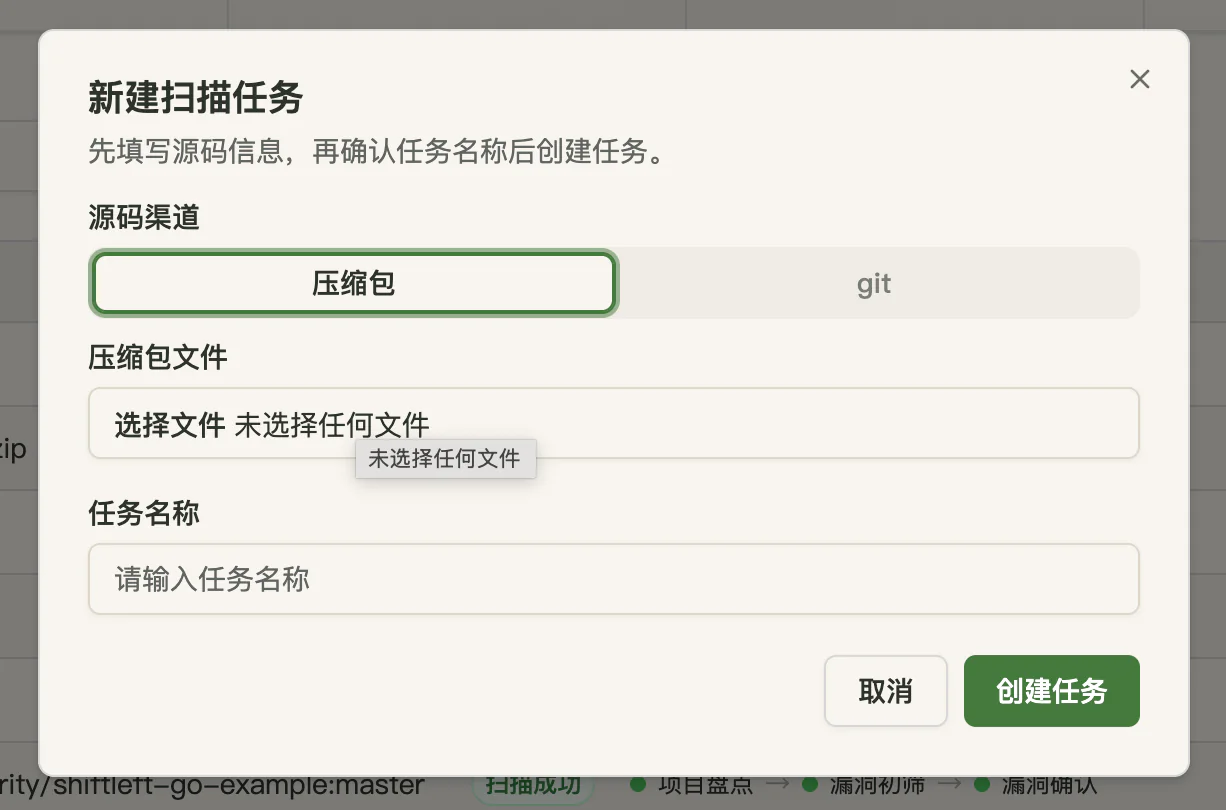
Connect a GitHub repository or upload a ZIP source package.
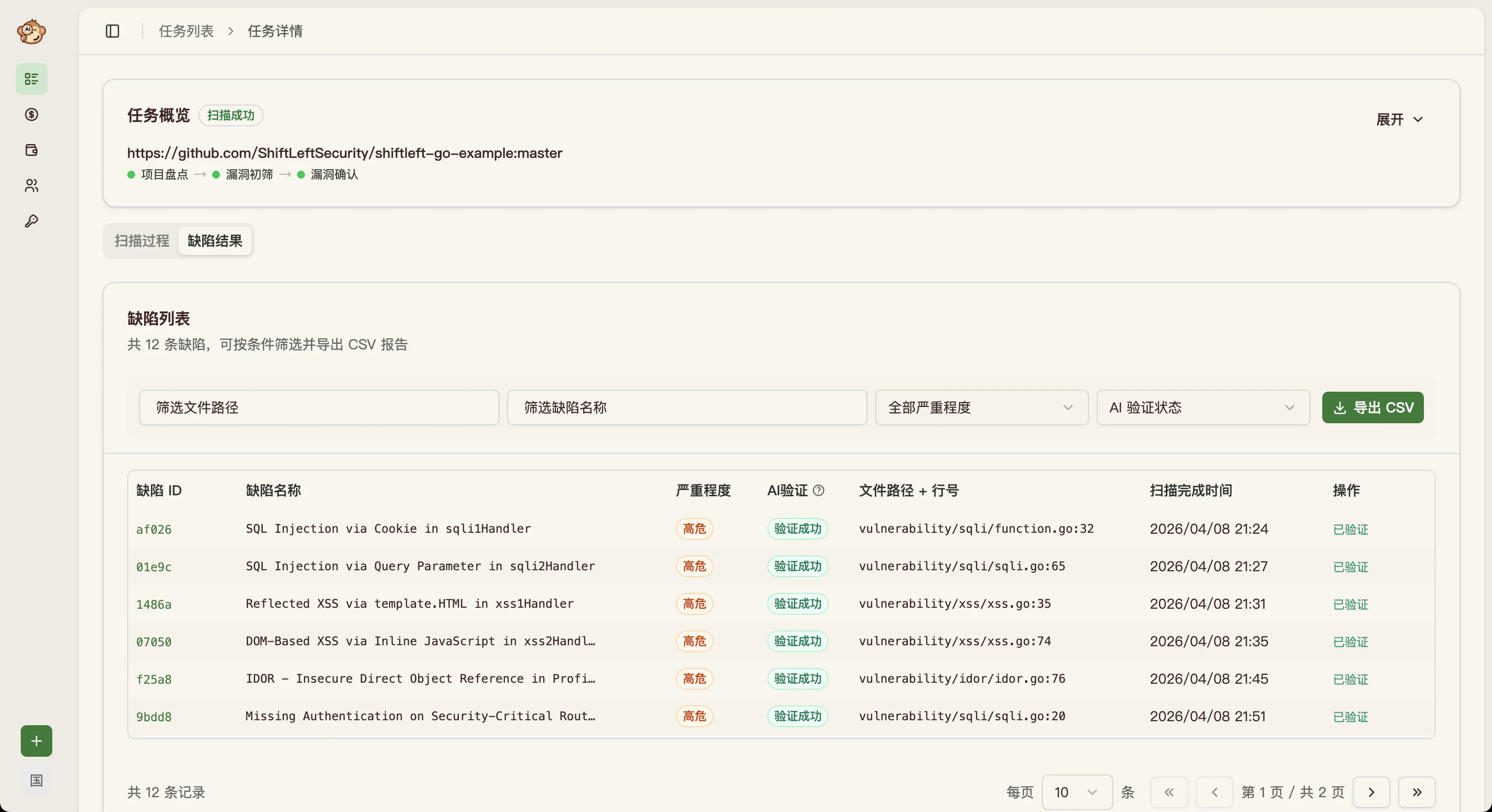
MonkeyScan analyzes the code and potential risks in an isolated environment.
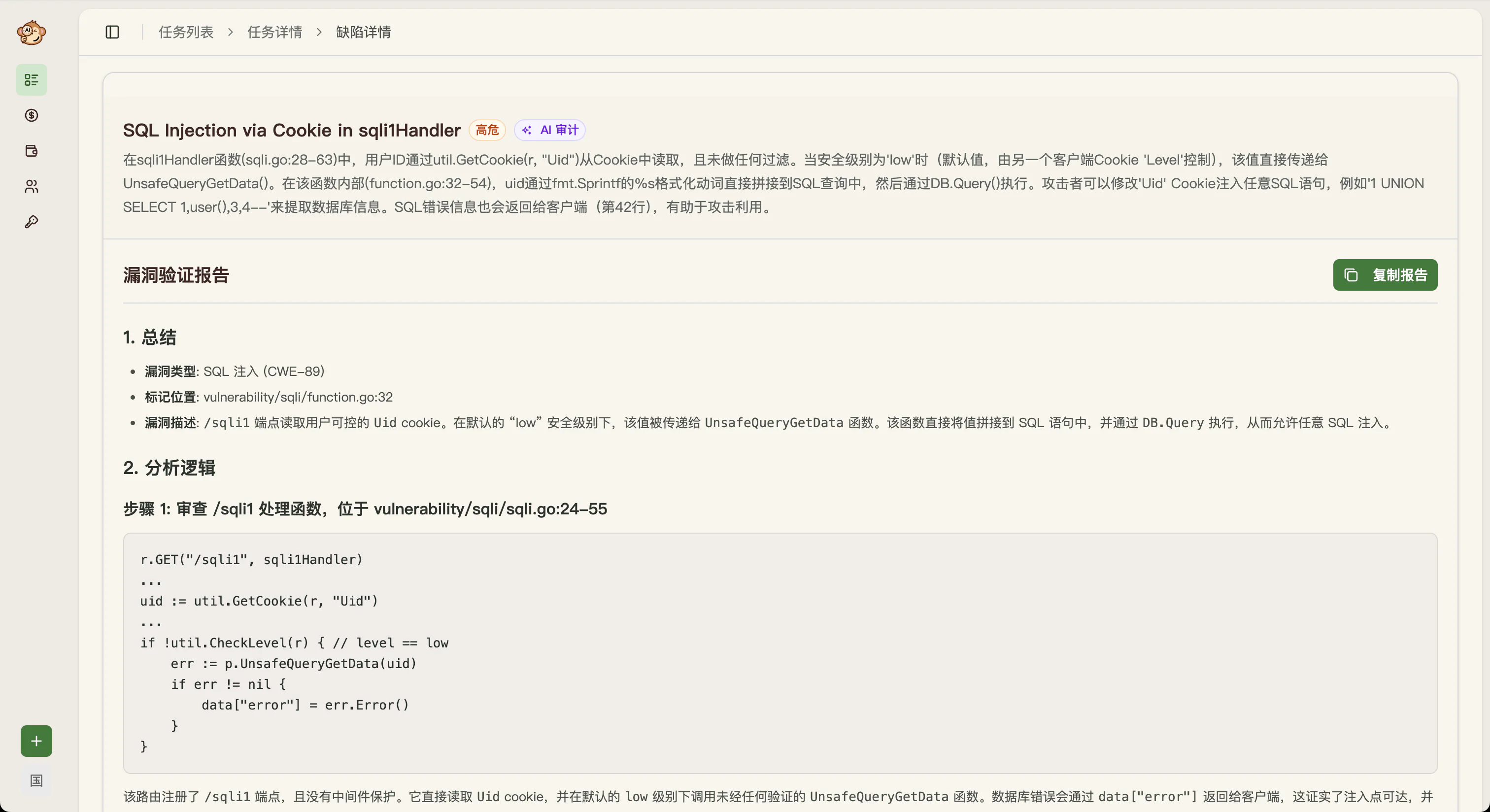
Inspect the location, cause, impact, and remediation guidance for each finding.
PARTNERS
Working with education partners to bring code security into hands-on learning and real software projects.

Cybersecurity course practice partner
MonkeyScan and GoodClass collaborate on hands-on cybersecurity education, bringing AI code review into courses so learners can analyze source-code risks, understand vulnerabilities, and practice remediation on real projects.
GoodClass focuses on professional IT education, with courses spanning AI cybersecurity, Python AI agent development, AI data analysis, and large-model applications.
AI helped us ship features faster, but security review could not keep up. MonkeyScan does more than report extra issues: it explains the risks that deserve attention first and why.
Zhang RanEngineering Lead · AI SaaS team
“Without a dedicated security engineer, I need a tool that understands the entire repository and tells me how to fix a problem, not just another list of rule alerts.”
Lin QiaoIndependent developer
“Scanning unfamiliar contributions before merging helps me find high-risk changes faster and decide where a human review is worth the time.”
Chen YuOpen-source maintainer
Source code is used only to complete the security analysis. The complete source is deleted after the scan; only snippets required to display and track findings are retained.
No. Every scan runs in an isolated sandbox so projects cannot access one another's data.
No. Submitted source code is not used to train public or third-party models.
New users receive free trial credits to evaluate MonkeyScan on a real project. Additional credits and paid plans are listed in the product.
MonkeyScan currently supports connected GitHub repositories and ZIP source packages. More platforms and import methods will be added over time.
No. MonkeyScan helps teams discover and understand risks faster. Critical businesses and high-risk systems should still combine it with expert review and security testing.
Use MonkeyScan for a pre-release security review and address risks before they reach production.
Start a free scan →No deployment required. Free trial credits for new users.